







Squaredle
Squaredle is a shining example of the current word puzzle genre, in which a deceptively simple square grid of letters hides a massive universe of interconnected terminology. Instead of imposing rigid guess boundaries or restricting players to repetitive rows and columns, the game offers a free-form playground that unleashes all of each player’s secret language and promotes spatial awareness.
Why is Squaredle so popular?
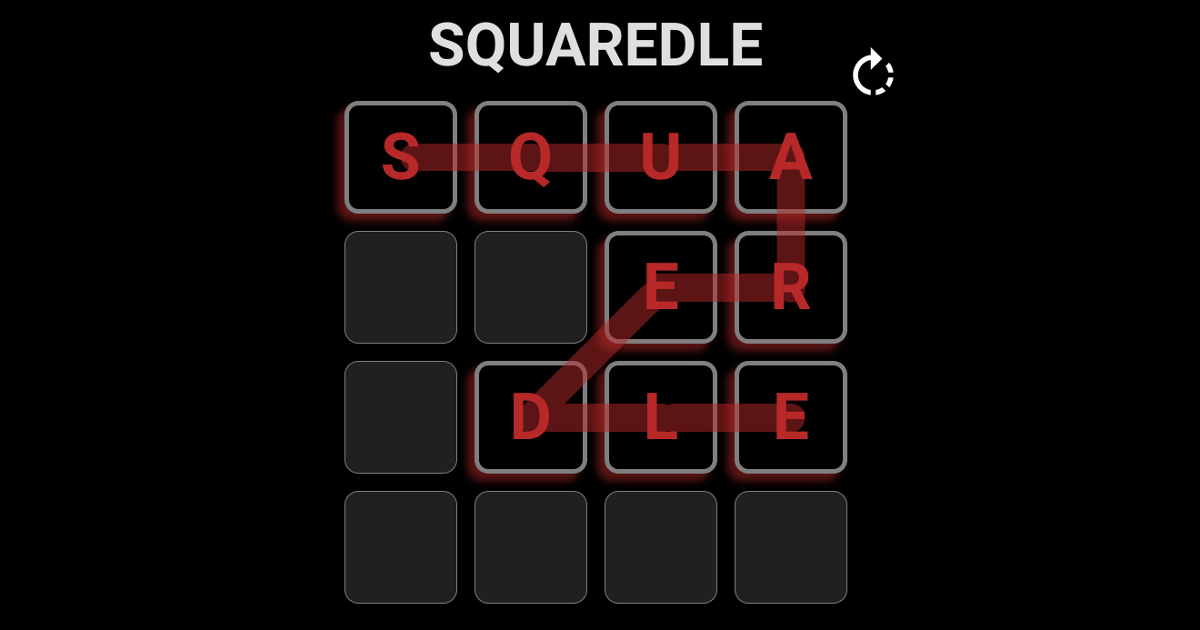
A flexible, multi-directional letter grid
Letters are located in a square matrix. You can link tiles horizontally, vertically or diagonally in any orientation to form hundreds of interwoven word combinations.
Full word hunting mechanics
Where Wordle is simply looking for one word, Squaredle is trying to find almost all the words that matter in that day’s grid – from familiar 4-letter words to obscure 8- and 9-letter words.
Ranking System & Progress Bar
As you learn new words, you fill up your experience bar and work your way up the title tiers, from beginner to word master.
Word of the Day & Bonus Words
Squaredle incorporates special, academic, or unique words, allowing you to earn bonus points and naturally expand your vocabulary.
Strategies for Maximizing Your Score
Stem & Branch
Don’t look up words in isolation. When you see a 4-letter root word, instantly check the neighbouring tiles for possible extensions:
Add suffixes and prefixes: PLAY, PLAYS, PLAYED, PLAYER, PLAYING. Morphological variants – plurals, past tenses or participles — are often a goldmine for quickly raising your score.
Finding center vowels
Strategic hubs are formed by vowels like A, E, I, O, and U in the middle of the grid. A central vowel connects to the eight surrounding spaces, acting as a pivot point that lets you join consonants from the outer edges into full words.
The "rotating perspective" scanning method
When you run out of ideas and can't spot new words, use the grid rotation feature (if available) or actively scan from the bottom up instead of just looking from top to bottom. Changing your visual angle breaks mental patterns, helping hidden character connections instantly stand out.
Do you think you can conquer Squaredle?
